Potty Training at Banana Moon Bromley: A Guide for Parents
Potty training is a big step for children and parents, and every child will approach it slightly differently.
At Banana Moon Day Nursery Bromley, we work closely with families to make the transition from nappies to using the potty or toilet as positive, consistent and stress-free as possible.
We recently held another online potty-training workshop for our parents, which was very well attended. It gave families an opportunity to ask questions, talk about some of the challenges they were experiencing and get practical advice about supporting their child both at home and at nursery.
It also reminded us how many parents have the same questions: When should we start? Should we use pull-ups? What happens if there are lots of accidents? And how will nursery support what we're doing at home?
So we've updated our potty-training guide with some practical advice.
When should I start potty training my child?
There is no single age when every child will be ready.
Current NHS guidance says that almost all children can be potty trained between 18 months and two-and-a-half years, and parents don't need to wait for a child to specifically ask to use the potty before introducing it. Children develop at different rates, so some will learn very quickly while others will need more time and support.
Before you begin, it can help to introduce your child to normal toileting routines. This might include changing nappies in the bathroom, talking about wees and poos, flushing the toilet together and encouraging handwashing.
Try to choose a reasonably settled time too. Starting potty training at the same time as a house move, new sibling or another major change can make things harder for some children.
Talk to your child's Key Person
If you're thinking about starting potty training, please speak to your child's Key Person or a member of the Banana Moon Bromley team first.
The more closely home and nursery work together, the easier it is for your child to understand what is expected.
Where practical, we recommend families begin the process at home for at least three consecutive days before continuing it at nursery. This gives your child an opportunity to get used to pants, the potty or toilet and their new routine in a familiar environment.
When they return to nursery, we can then continue the same approach.
Don't worry if there are accidents. They're a completely normal part of learning.
Should children wear nappies or pull-ups while potty training?
Once daytime potty training has properly started, current NHS guidance recommends moving from nappies and pull-ups into pants during the day. This helps children begin to recognise the feeling of being wet or dry. Nappies can continue to be used for naps and overnight while children develop nighttime dryness naturally.
Consistency between home and nursery is particularly helpful, so let your child's Key Person know what you're doing at home.
And please send plenty of spare clothes and pants into nursery. Accidents are expected and we deal with them calmly and positively.
Build potty or toilet visits into the day
Young children may not always recognise that they need a wee or poo early enough to tell an adult.
Rather than relying entirely on them to ask, it can help to make using the potty or toilet part of the normal daily routine.
Useful times might include:
- after waking up
- after meals
- before leaving the house
- before a nap
- before bedtime
- before a longer journey
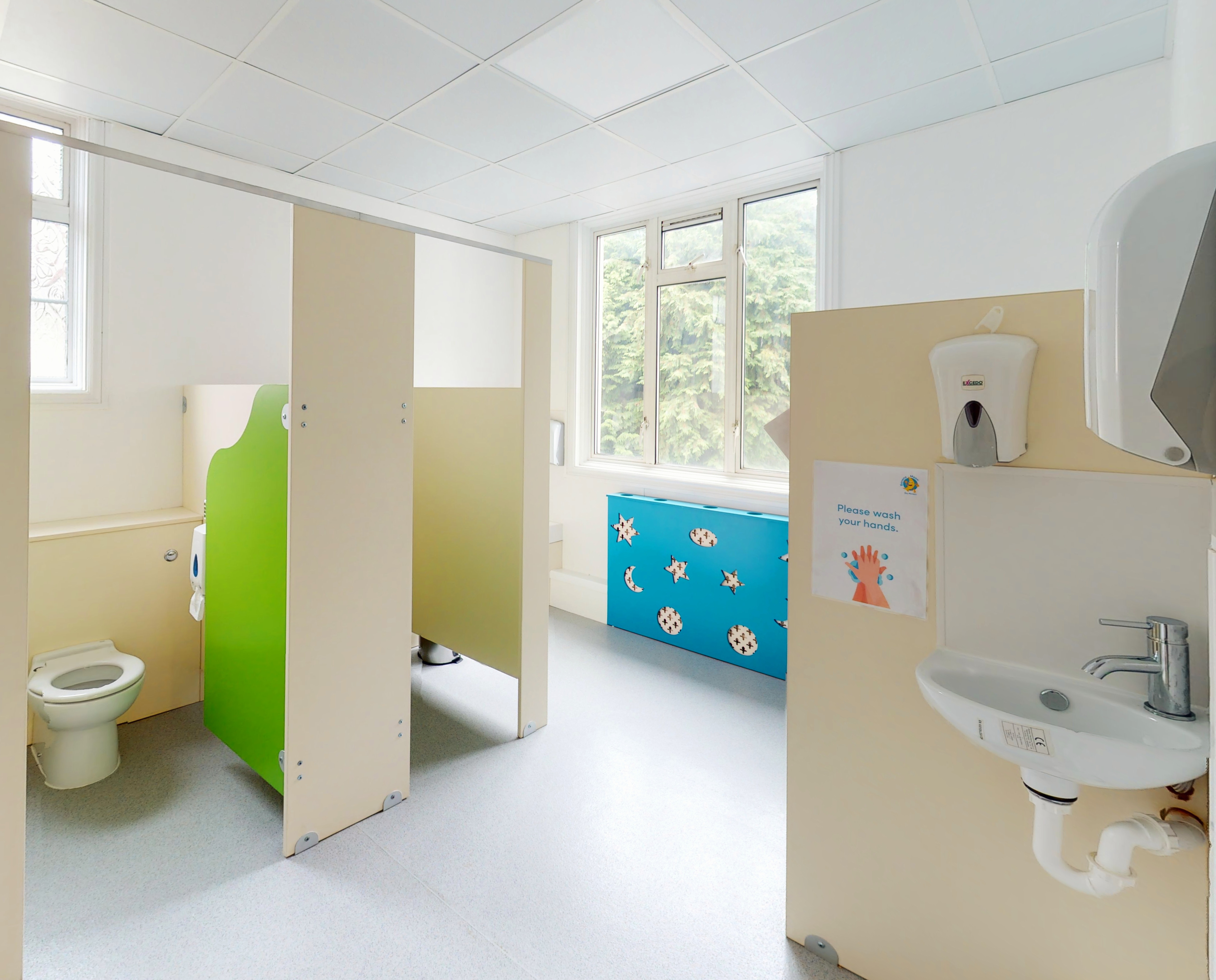
At nursery, our practitioners support children with regular opportunities to use our child-sized toilet facilities and encourage growing independence with clothing, flushing and handwashing.
What equipment do I need for potty training?
You don't need to buy lots of special equipment.
Useful things can include:
- a potty, or a child toilet seat and step
- plenty of pants
- clothes that are easy for your child to pull up and down
- spare clothes
- a travel potty for days out
- an absorbent car-seat liner
- Joggers, leggings and other simple clothing are usually much easier for young children to manage independently than complicated buttons, belts, tights or fastenings
- If your child uses the toilet rather than a potty, make sure they can sit securely and rest their feet on a step. This can help them feel comfortable and gives them a better position for doing a poo.
Praise the effort, not just the result.
Learning to use the toilet takes practice.
Praise children for trying, even when nothing happens.
A sticker, clap, high five or simple "well done for trying" can help make the experience positive.
If an accident happens, stay calm, help your child change and move on. NHS advice is clear that accidents are a normal part of learning and children shouldn't be made to feel embarrassed or upset about them.
Don't forget about constipation
Constipation can make potty training much more difficult.
Look out for:
- hard or dry poos
- small pellet-like poos
- straining or pain when pooing
- fewer than three poos in a week
- a child deliberately trying to hold their poo
Painful bowel movements can make children frightened of going to the toilet, which can lead to further withholding and make constipation worse.
Encourage plenty of fluids, fruit, vegetables and physical activity.
If you think your child is constipated, speak to your health visitor or GP. The NHS recommends getting help early rather than trying to push ahead with potty training while a child is uncomfortable.
What if potty training isn't going to plan?
Some children learn very quickly. Others need much longer.
There may be progress followed by accidents or regression, particularly during periods of change.
Try not to compare your child with siblings, friends or other children at nursery.
If things aren't working, speak to us. We can compare what we're seeing at nursery with what you're seeing at home and agree a consistent approach together.
And if you have concerns about constipation, regular soiling or your child's progress, your health visitor or GP can provide additional advice and support.
How does Banana Moon Bromley support potty training?
Potty training works best when children receive the same calm and positive message wherever they are.
At Banana Moon Bromley we:
- work with parents before and during potty training
- agree a consistent approach between home and nursery
- offer regular opportunities to use our child-sized toilets
- support children with dressing, undressing, flushing and handwashing
- encourage independence without putting children under pressure
- deal with accidents calmly and discreetly
- keep families updated on progress
- provide parent workshops and practical support when families need extra guidance
Our Mini Moons, aged approximately two to three, are at an age when many families begin potty training, and developing independence is already an important part of their everyday nursery experience.
Working together
Potty training isn't something parents or nursery need to manage alone.
Good communication between home and nursery can make a huge difference. Let us know when you're thinking about starting, tell us what's working at home and don't be afraid to ask questions.
The aim isn't to rush children. It's to help them gradually develop the confidence, independence and practical skills they need to use the toilet successfully.
Our recent parent workshop showed just how useful it can be to talk about these challenges openly, and we'll continue supporting Banana Moon Bromley families throughout this important stage.
If your child attends Banana Moon Bromley and you're considering starting potty training, speak to your child's Key Person or a member of our management team. We're always happy to help.
If you have any questions, please contact the nursery at info@bananamoon-bromley.co.uk